

西奥骨化醇 ≥98%
促销价¥{{model.attbuying.price}}
市场价¥0.00
累计销量0 累计评价0 人评论
别称
{{model.alias}}
中文名称
{{model.name}}
英文名称
{{model.enname}}
品牌
{{model.brand}}
CAS
{{model.cas}}
分子式
分子量
{{model.molecularweight}}
MDL
{{model.mdl}}
货号
{{model.procode}}
-
{{item.title}}
看了又看
| 包装规格: | 1mg 5mg in glass bottle |
| 溶解性: | 溶于DMSO(≥50mg/mL) |
| 产品描述: | 基本信息 产品编号: S11119 产品名称: Seocalcitol CAS: 134404-52-7 储存条件 粉末 -20℃ 四年 分子式: C30H46O3 溶于液体 -80℃ 6个月 分子量 454.68 -20℃ 1个月 化学名: (1R,3S,5Z)-5-((2E)-((1R,3aS,7aR)-1-((1R,2E,4E)-6-Ethyl-6-hydroxy-1-methyl-2,4-octadienyl)octahydro-7a-methyl-4H-inden-4-ylidene)ethylidene)-4-methylene-1,3-cyclohexanediol;EB 1089 Solubility (25°C): 体外: DMSO ≥ 50 mg/mL (109.97mM) Water Ethanol 体内(现配现用): <1mg/ml表示微溶或不溶。 普西唐提供的所有化合物浓度为内部测试所得,实际溶液度可能与公布值有所偏差,属于正常的批间细微差异现象。 请根据产品在不同溶剂中的溶解度选择合适的溶剂配制储备液;⼀旦配成溶液,请分装保存,避免反复冻融造成的产品失效。 制备储备液 浓度 溶液体积 质量 1mg 5mg 10mg 1mM 2.1993mL 10.9967mL 21.9935mL 5mM 0.4399mL 2.1993mL 4.3987mL 10mM 0.2199mL 1.0997mL 2.1993mL 生物活性 产品描述 一种 vitamin D 类似物,作用于人骨肉瘤 MG-63 细胞,结合 vitamin D 受体蛋白,Kd 为 0.27nM。 靶点 Kd: 0.27nM (vitamin D receptor) 体外研究 Seocalcitol (EB 1089) is a stimulators of osteoclast recruitment in murine bone marrow cultures, with EC50 at 0.1nM. Seocalcitol stimulates bone resorption with an estimated EC50 at 0.03nM. Seocalcitol (EB 1089) elicites a dose-dependent induction of 24-hydroxylase mRNA in the kidney (EC50=0.4±0.13). In the kidney, Kd values for Seocalcitol is 0.48±0.04nM. However, in the intestine, the Kd for Seocalcitol is 1.43±0.19nM). Seocalcitol (0.1-10nM) induces cell differentiation in a dosedependent manner. A higher differentiating activity is observed for 1nM Seocalcitol (EB 1089) than for 1nM VD3 体内研究 Seocalcitol (EB1089), a synthetic vitamin D analog, exhibits reduced hypercalcemic activity relative to 1,25(OH)2VD3. In another study, long-term intraperitoneal (IP) administration of Seocalcitol at a dose of 0.5μg/kg body weight every other day in C3H/Sy mice exertes a very strong inhibitory effect on hepatocellular carcinoma (HCC) development. Seocalcitol (EB 1089) is administered daily to postnatal rats from 4 to 12 days of age (P4 to P12) by intraperitoneal injection at either 0.38 or 1.25μg/kg body weight (BW)/day. Only the highest dose of Seocalcitol (1.25μg/kg BW) causes a significant reduction in weight gain when administered alone or in conjunction with Dexamethasone, all-trans retinoic acid (RA), or retinoic acid 特征 推荐实验方法(仅供参考) Kinase Assay Vitamin D receptor protein is prepared from cultures of human osteosarcoma cell line MG-63. Suspensions of 5×10⁷ cells/mL are homogenized, sonicated, and centrifuged at 30,000g for 1 h at 4°C. The presence of the 1α,25(OH)2D3 receptor is verified by sucrose density gradient analysis. The supernatants are adjusted to 2 mg protein/mL and used for binding studies. Samples of 500μL are incubated with 10,000dpm [3H]1α,25(OH)2D3 (180 Ci/mmol) and increasing concentrations of 1α,25(OH)2D3 or vitamin D3 analogs are added. After incubation for 60 min at 22°C, bound and free [3H]1α,25(OH)2D3 are separated on dextran-coated charcoal. Each compound is tested in three separate experiments. Cell Assay This fluorescent dye allowed to determine ROS release in HL60 cells, untreated or treated VD3 or Seocalcitol. Briefly, after treatment, HL60 cells are washed and re-suspended at 106 cells/mL in RPMI-1640 without FCS and phenol red. Then, 10μM H2-DCFDA probe is added to each plate at a final volume of 2mL. Cells are incubated for 45 min at 37°C in the dark. A second wash is made before the fluorescence analysis using spectrometer at 488nm intensity excitation λex and 516nm emission λem. Results, in arbitrary fluorescence units (AFU), are expressed according to the ratio [(AFU-treated cells)/(AFU control cells)]×100 Animal Administration MiceSix- to eight-week-old male BALB/c NU/Nu mice are inoculated subcutaneously with 106 SKHEP-1 cells into the right flank. Twenty-four hours after inoculation, mice are randomly assigned to a control group (n=10) or the treatment groups (n=10), receiving 0.02, 0.1 or 0.5μg/kg per day of Seocalcitol (intraperitoneal or oral on alternate days). Control animals receive propylene glycol alone. Tumor size is measured using vernier calipers every third day and the volumes are estimated using the formula 0.5×length×(width)2. Animals receive sterile food and water.RatsNewborn Sprague-Dawley rat pups are randomly assigned to 1 of 6 treatment groups, consisting of daily intraperitoneal injections of the vitamin D analogue Seocalcitol (0.38 or 1.25μg/kg body weight) alone, or in combination with all-trans retinoic acid (RA; 500 μg/kg body weight) and/or Dexamethasone (DEX; 0.25μg/day) in a 3×2×2 factorial design. Seocalcitol and RA injections are conducted on P3 through P12, whereas Dexamethasone is administered on P4 through P12. Seocalcitol is prepared for injections in a quantity sufficient for all injections by dilution from a stock solution (4mM in isopropanol) into the carrier Solutol HS 15 (BASF). Solutol-diluted Seocalcitol is stored as aliquots in sealed glass vials under nitrogen gas at 4°C, with daily injections conducted with freshly unsealed aliquots of Seocalcitol. Stock solutions of RA (50 mg/mL DMSO are stored under nitrogen at −80°C and prepared for injection by dilution of freshly thawed aliquots into cottonseed oil (2μg/μL). A Dexamethasone stock solution (10 mg/mL ethanol) is stored under nitrogen at 4°C and prepared fresh for daily injections in 0.9% NaCl (0.25μg/μL). All rats receive equivalent volumes of the 3 carrier solutions employed (solutol, cottonseed oil, 0.9% NaCl). Seocalcitol and RA are administered as a 2-phase solution via a 10μL injection using a 20μL glass-barreled syringe and a 28-gauge needle, whereas Dexamethasone is administered in a separate 10μL injection. |
| 保存条件: | -20℃ 充氮保存 |
-
蜀牛玻璃三角瓶
¥85.00 销量:16
-
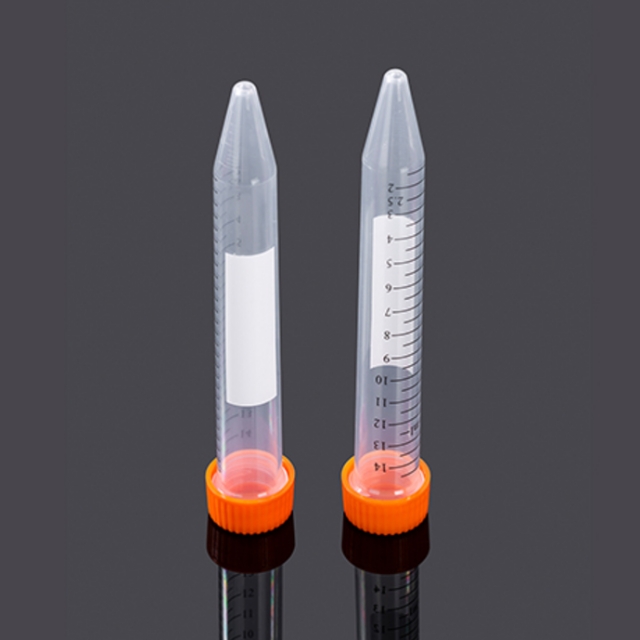 15mL锥底离心管,袋装灭菌,橙色盖
¥636.00 销量:12
-
UFC5030BK 超滤管[0.5ml 30KD]
¥52.00 销量:10
-
UFC5010BK 超滤管[0.5ml 10KD]
¥52.00 销量:10
-
20×TBST缓冲液
¥130.00 销量:10
-
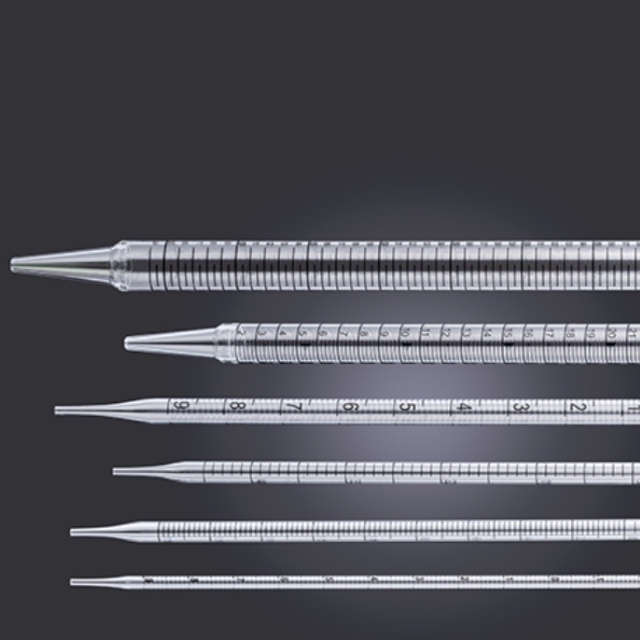 10mL移液管,易撕型全塑包装
¥456.00 销量:10


猜你喜欢
-
¥158.00
通用型 DNA 纯化回收试剂盒 -
¥158.00
质粒快速小提试剂盒 -
¥828.00
100mm TC细胞培养皿,袋装灭菌